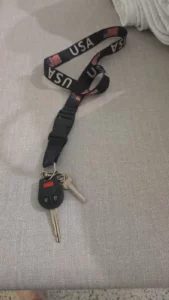

If you are not sure what kind of car key you have, start with this simple rule. If it has buttons, it is likely a remote key or a key with a remote built in. If it has no buttons but starts a newer car, it may be a transponder key. If it is plain metal and works in an older car with no chip system, it is usually a basic key. Knowing your key type helps you ask for the right help and saves time when you are stuck.

Why your key type matters
Picture this. You are in a parking lot off Highway 290, holding a key and saying, “It is just a key, right?” Not always. Car keys have changed a lot over the years. Some are simple. Some talk to your car. Some do both.
When you know your car key type, you can ask for the right Car locksmith service the first time. That cuts down guesswork. It also helps when your key breaks, stops working, or goes missing.
A wrong guess can slow things down. A basic key can often be cut from the lock code or copied fast. A transponder key may need programming. A remote key may need both a cut and remote setup. It is like bringing the right wrench to a job. The right tool makes the day go smoother.
The 3 main key types in plain English
Let us keep it simple. Most drivers run into these three types.
Basic key
A basic key is the old-school kind. It is usually just a metal key with cuts on the blade. No buttons. No battery. No chip in many older models.
This key does two main jobs, unlock the door and turn the ignition.
You often see basic keys on older cars, older trucks, and some work vans. If your key looks plain and your vehicle is older, this may be what you have.
Signs of a basic key:
- No buttons on the head
- No plastic remote fob attached, unless it is separate
- No chip needed to start many older cars
- Usually cheaper and easier to copy than newer key types
Transponder key
A transponder key looks simple at first glance. That is the sneaky part. It may look like a plain key, but inside the plastic head is a small chip. That chip sends a coded signal to your car.
If the code matches, the car starts.
If the code does not match, the car may crank and die, or not start at all.
Many cars made from the late 1990s and later use this setup. So if your key has no buttons but your car is not very old, there is a good chance it is a transponder key.
Signs of a transponder key:
- Thick plastic head
- Few or no buttons
- Vehicle will not start with a simple hardware-store copy unless the chip is programmed
- Often used on cars from the late 1990s through many 2010s models
Remote key
A remote key usually has buttons to lock, unlock, pop the trunk, or sound the panic alarm. Some remote keys are two pieces, a metal key plus a separate fob. Others are all in one piece.
Some remote keys also have a transponder chip inside. That means the buttons control the locks, and the chip lets the car start. A lot of drivers hear “remote key” and think it is only the buttons. In many cases, it is both brains and brawn.
Signs of a remote key:
- Buttons on the key or fob
- Battery inside
- May have a flip-out blade or fixed blade
- May still need programming for the chip and the remote functions
The fastest ways to spot your key type
You do not need a lab coat for this. Just check a few things.
Look for buttons
Buttons are the biggest clue. Lock and unlock buttons point to a remote key or key fob. If there are no buttons, move to the next clue.
Check the head of the key
A thin metal key with a small plain head may be basic. A thicker plastic head often points to a transponder key. That head is where the chip may live.
Think about your car’s age
Older vehicles are more likely to use basic keys. Many newer cars use transponder keys, remote keys, or smart systems.
This is not a perfect rule, but it helps.
Watch what happens when you start the car
If a copied key opens the door but will not start the engine, your vehicle may need a transponder chip. That is a classic clue.
See if you have a separate fob
Some cars came with a plain-looking key and a separate remote fob. In that case, your metal key may still be a transponder key, even though the remote is not built in.
A quick side-by-side look
| Key type | What it looks like | Starts car with chip? | Has buttons? | Battery needed? |
|---|---|---|---|---|
| Basic key | Plain metal key | Usually no | No | No |
| Transponder key | Metal blade with thick plastic head | Yes | Usually no | No |
| Remote key | Key or fob with lock buttons | Often yes | Yes | Yes |
If you are stuck, use this simple path
- If your key has lock or unlock buttons, think remote key.
- If your key has no buttons but the plastic head is thick, think transponder key.
- If your key is plain metal and your car is older, think basic key.
- If a copy opens the door but will not start the car, think transponder chip.
- If the buttons stop working but the car still starts, the remote battery may be dead.
- If nothing works after the key gets wet, the chip or remote may need testing.
What we usually see in Cypress, TX
In Cypress, TX, many drivers have trucks, SUVs, and family cars with transponder keys or remote keys. Around neighborhoods near Bridgeland and Towne Lake, we often see built-in remote keys on newer models. On older work vehicles near FM 1960 or Barker Cypress Road, plain keys and early transponder keys still show up a lot. So if your key feels like a mystery, you are not alone.
Weather can mess with keys more than you think
Texas weather has a personality. Some days it acts fine. Some days it throws a fit.
Heat can drain remote batteries faster, especially when a fob sits in a hot truck or on a sunny dash. Humidity and rain can also hurt a damaged remote shell and let moisture get inside. Once water reaches the battery or board, the remote may act like it has stage fright and stop working.
Cold snaps can make weak batteries show their age. The remote may work one day and quit the next morning. Metal keys can also feel stiff in door locks after wet weather and dirt buildup.
Simple care helps:
- Keep your remote out of direct sun when you can
- Replace cracked key shells
- Do not leave a wet key in a cup holder overnight
- Wipe off dirt before it gets packed into buttons or grooves
Common mix-ups people make
A lot of people think every key with plastic is chipped. Not true. Some basic keys have plastic heads with no chip.
Others think the buttons are what start the car. Not always. The remote buttons handle door functions. The transponder chip handles engine start on many vehicles.
Then there is this classic line, “My key looks normal, so any copy should work.” That is where many folks hit a wall. A plain-looking transponder key can fool the eye.
A few myths, and the real story
Myth: If the key turns, it should start the car.
Fact: A transponder system may block the engine if the chip code is missing or wrong.
Myth: If the remote battery dies, the key is useless.
Fact: Many remote keys still have a metal blade and chip, so the car may still start.
Myth: A hardware-store copy works for every car key.
Fact: Basic copies work for some keys, but many chip keys need programming.
Myth: If the buttons work, the chip must be fine.
Fact: The remote part and the chip part are often separate systems.
A short story that sounds familiar
A driver in Cypress once said, “My truck key has no buttons, so it must be basic.” Fair guess. But the truck would not start with a copy. The key had a transponder chip hidden in the head. The copy fit the lock like a glove, but the truck still said, “Nice try, pal.”
That happens all the time. Looks can fool you.
When you should ask a locksmith for help
You do not need help just to identify your key if the clues are clear. Still, some signs mean it is time to stop guessing.
Ask for help if:
- You lost the only key
- A copied key opens doors but will not start the car
- The remote buttons work off and on
- The key broke in the ignition or door
- You are not sure if the key needs programming
- The shell is cracked and the chip may fall out
A trained Car locksmith can identify the key type, cut the right key, and program it when needed. That saves you from buying the wrong thing and going in circles. If you are locked out while sorting it out, an Emergency locksmith can help too.
Care plan that keeps key trouble away
A little care now can save a lot of grumbling later.
Weekly
- Check that buttons press cleanly
- Keep the key dry
- Do not overload the keychain with heavy junk
Monthly
- Wipe the key and fob with a dry soft cloth
- Check for cracks in the shell
- Test your spare key if you have one
Yearly
- Replace weak remote batteries
- Check worn metal blades before they stop turning well
- Get a spare made before you lose the last working key
That last point matters. A Car key duplication service is like a backup catcher. You hope you do not need him, but you sure feel better when he is there.
Safety notes worth knowing
If your key gets stuck in the ignition, do not force it. A bent key can snap fast. If your remote got soaked, remove it from water and stop pressing buttons. More button pressing can push moisture farther inside. If a key is cracked and the chip is loose, keep all pieces together. That small chip matters.
For more about vehicle anti-theft systems and how transponders are used, you can read this overview of immobilisers. For general battery handling and disposal guidance, see the EPA battery recycling page.
FAQs
How can I tell if my key has a transponder chip?
Look for a thick plastic head and think about your car’s age. If the car is from the late 1990s or newer, there is a good chance the key has a chip. A plain copy that opens the door but will not start the engine is another strong clue.
Can a basic key have a plastic head?
Yes. A plastic head does not always mean there is a chip inside. Some basic keys have plastic heads for grip only.
What if my remote buttons work, but the car will not start?
That can mean the remote is fine, but the transponder chip is not being read. The remote system and engine security system are often separate.
Does every car key with buttons need a battery?
The remote part does. The transponder chip usually does not need a battery. That is why some cars still start even when the remote buttons stop working.
Can rain or humidity damage a key fob?
Yes. Moisture can hurt the battery contacts or the board inside. Cypress weather can be rough on a cracked fob shell, so keep it dry and replace damaged cases.
Is a valet key the same as a basic key?
Not always. A valet key may look simple, but some still have a chip. It may start the car while limiting glove box or trunk access on some vehicles.
What should I do if I only have one key left?
Get a spare made soon. Waiting until the last key is gone can turn a small problem into a bigger one.
Can a locksmith identify my key type if I am not sure?
Yes. A locksmith can check the key, the vehicle, and the system it uses, then match the right service.
If you need help with a basic key, a transponder key, or a remote key in Cypress, TX, Quality Lock & Key can help you get the right fix without the runaround. We can identify your key type, cut keys, and handle programming when needed, so you save time and avoid the wrong service. Call (281) 871-1658 or visit https://qualitylockandkey.us. You can also reach out through Contact Us or learn more about Car key replacement.