A front door lock hard to turn often needs a door or strike adjustment, not a new lock. Test the key and deadbolt with the door open, then closed. Trouble only when closed points to alignment. Smooth hardware with old-key concerns may call for rekeying. Sticking even when open can signal worn or damaged lock parts that need repair or replacement.
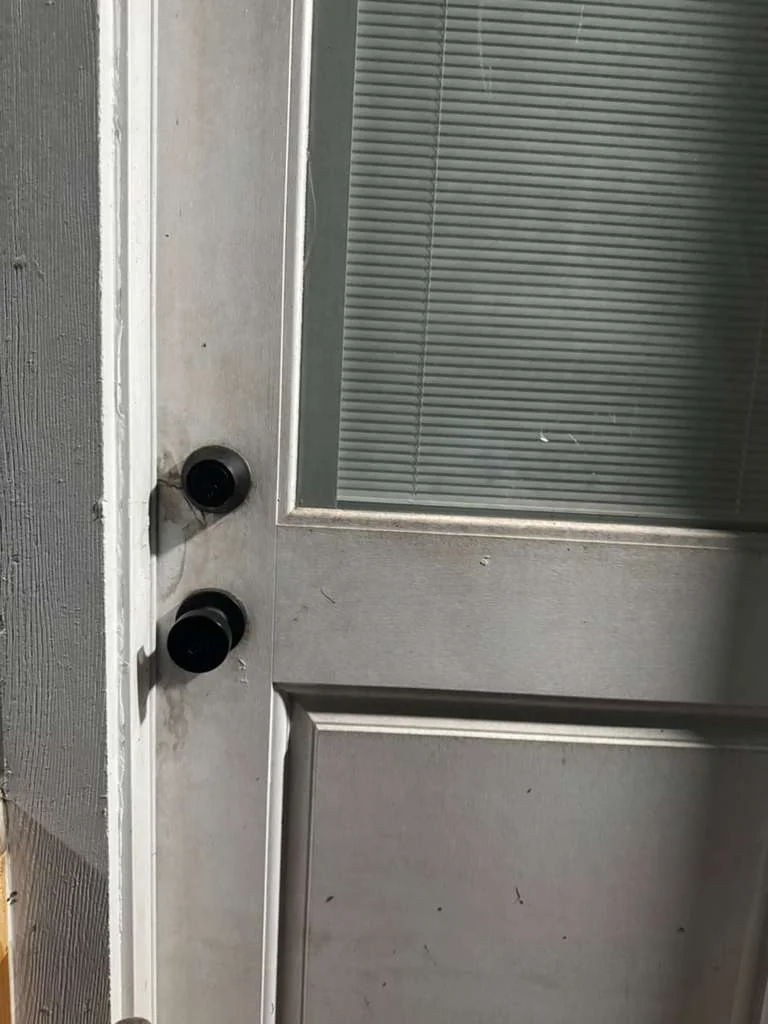
Start with the open-door and closed-door test
Don’t force a key or deadbolt. A key can bend or break, and a bolt pushed against the frame can damage the lock further. Instead, use this simple test while you still have safe access to the home.
- Open the door fully.
- Insert the usual key and turn it slowly. Lock and unlock the deadbolt several times.
- With the door still open, turn the inside thumbturn if your deadbolt has one.
- Close the door without locking it. Check whether it rubs, catches, or needs lifting, pushing, or pulling to sit in the frame.
- Try the key and deadbolt again with the door closed.
Schlage’s deadbolt installation guidance uses the same basic check. Test the bolt open first, then closed. A bolt that hits or drags on the strike plate only after the door closes points to an alignment problem at the frame.
This test separates a door-fit problem from a problem inside the lock. It also gives a locksmith useful details before any work begins.

Choose repair when the door and frame are fighting the bolt
Repair or adjustment is often the first path when the lock works freely with the door open but becomes hard to turn once it is shut. The key may be fine. The bolt may simply not line up with the hole in the strike plate.
Look for these signs before assuming the cylinder has failed.
- You need to lift, pull, or push the door before the deadbolt turns.
- The bolt scrapes the strike plate or stops short of going all the way in.
- The door edge rubs the frame.
- The latch and deadbolt both feel worse when the door is closed.
- The problem changes after heavy rain, humid weather, heat, or a change in the door’s fit.
In Cypress, changing weather and normal settling can affect the fit between a door, frame, weatherstripping, hinges, and strike plate. That doesn’t prove the lock is in good shape, but it is a reason to check alignment first.
Schlage’s door-latch troubleshooting notes that a door requiring a push, pull, or lift may have sagging hinges or strike alignment trouble. It also notes that a deadbolt pocket needs to be 1 inch deep so the bolt can extend without dragging.
What a lock repair visit can check
A residential locksmith can check the whole entry instead of looking at the key alone. Quality Lock & Key’s residential lock repair service says its mobile service checks hinges, weatherstripping, jamb alignment, strike plates, and lock bodies before presenting options.
That inspection matters when a door has more than one issue. Tightening or adjusting the right part may restore smooth operation. If the lock body or cylinder has damage, the inspection can also show when an adjustment won’t be enough.

Choose rekeying when the lock works but key control has changed
Rekeying changes which keys work in an existing lock. It is a key-control choice, not a cure for a deadbolt that drags against the frame or a cylinder that sticks with the door open.
Rekeying may fit when the hardware turns smoothly and you want old keys to stop working after a move, a lost key, or a change in who should have access. It can also help simplify keys if the existing locks are compatible, though compatibility depends on the lock cylinder and keyway.
During rekeying, the locksmith changes the cylinder so it works with new keys while the existing hardware stays in place. If the key is already sticking, mention that before the visit. The lock should be checked for a mechanical problem before relying on rekeying alone.
When rekeying is not the right first fix
Skip straight to a lock inspection if any of these are happening.
- The key binds, catches, or will not turn while the door is open.
- The key has visible damage or does not go in fully.
- The key turns but the deadbolt does not move as it should.
- The lock feels loose, damaged, or unreliable.
- You have to use force to lock or unlock the door.
Those signs may involve the cylinder or other lock parts. A locksmith can determine whether repair is possible or whether replacement makes more sense.
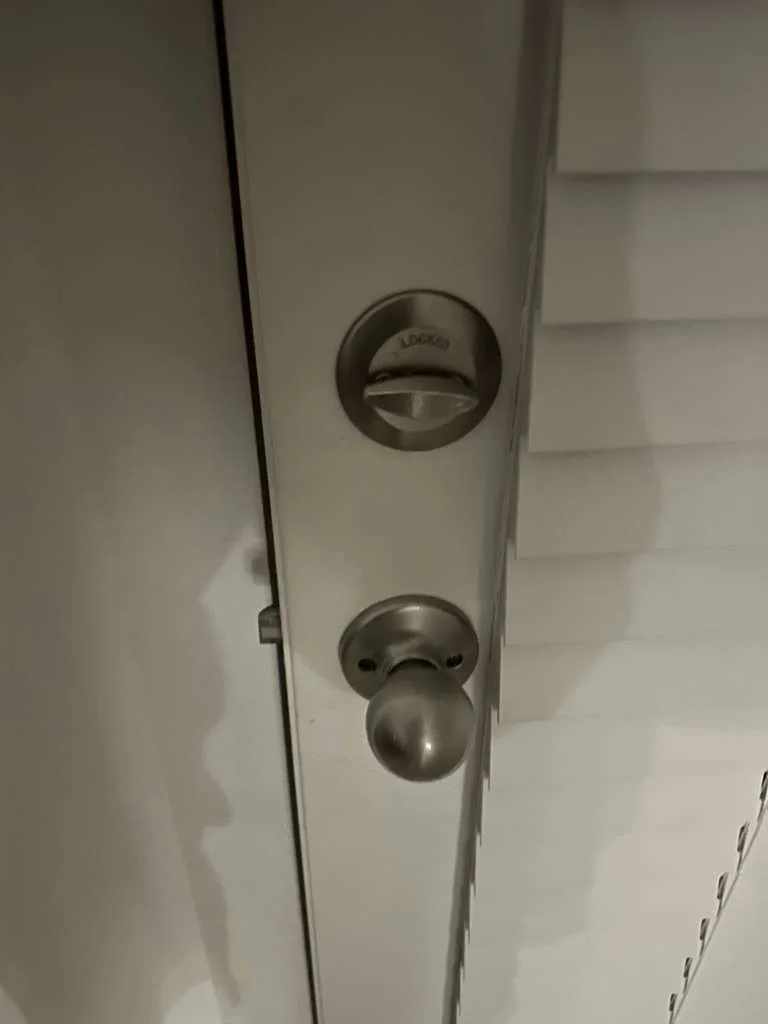
Choose replacement when the lock itself is worn, damaged, or unreliable
Replacement is the stronger choice when the front door lock stays hard to turn with the door open. With no frame pressure on the bolt, sticking points more toward a problem within the key cylinder, bolt, thumbturn, or lock body.
Replacement may also make sense if the hardware is damaged, missing parts, does not operate consistently, or cannot support the key arrangement you need. A new lock can be selected after checking the door preparation and the existing hardware. Don’t buy parts first if you are unsure about fit.
| What you notice | Likely next step |
|---|---|
| The bolt works open but catches only when shut | Inspect the door, hinges, jamb, and strike plate for repair or adjustment |
| The lock works smoothly but old keys should no longer work | Ask about rekeying if the cylinder and keyway are compatible |
| The key sticks even with the door open | Have the cylinder and lock body inspected for repair or replacement |
| The lock is loose, damaged, or unpredictable | Plan for a professional inspection and discuss replacement options |

Take a few safe steps before the locksmith arrives
Small details can shorten the inspection and help avoid a lockout. Use this checklist without taking the lock apart or forcing the key.
- Keep the door unlocked if you can do so safely until it is checked.
- Set aside every key that works poorly and any key that still works normally.
- Note whether the problem happens only from outside, only from inside, or on both sides.
- Note whether it happens with the door open, closed, or both.
- Take a clear photo of the inside and outside hardware if you are calling for service.
- Tell the locksmith about recent door work, changes to weatherstripping, or a key that bent or broke.
A little graphite or other product may be tempting, but it will not fix a bolt that misses the strike plate or a worn part inside the lock. Avoid repeated spraying or forcing the key. Those steps can make the symptoms harder to assess.
Know when the problem needs prompt help
Call a locksmith promptly if the key feels close to breaking, the deadbolt will not unlock, the door cannot be secured, or the lock has visible damage. If someone is trapped inside and there is fire or smoke, call 911 first.
For a front entry that still works but feels unreliable, arrange service before it turns into a lockout. Quality Lock & Key offers mobile residential locksmith service in Cypress, including lock repair, rekeying, and replacement options.
Questions homeowners ask about stubborn entry locks
Can a worn key make a front door lock hard to turn?
Yes. A worn, bent, or damaged key can catch inside the cylinder even if the door alignment is fine. Compare it with another working key if you have one. Do not keep forcing a damaged key, since it may break in the lock.
Why does my deadbolt turn easily from inside but not with the key outside?
The outside key cylinder may be the trouble if the inside thumbturn works smoothly and the door is open. The reverse can also happen. This difference is useful to report because it helps narrow down which part needs inspection.
Should I replace both the deadbolt and the handle lock together?
It depends on the condition and key setup of each lock. Replacing both may be useful if you want matching hardware or a single key, but a locksmith can check whether the existing locks can be repaired or rekeyed instead.
For help with a stubborn front door lock in Cypress, call Quality Lock & Key at (281) 871-1658. Describe what happens with the door open and closed, then ask for residential lock service to inspect the entry and discuss repair, rekeying, or replacement.