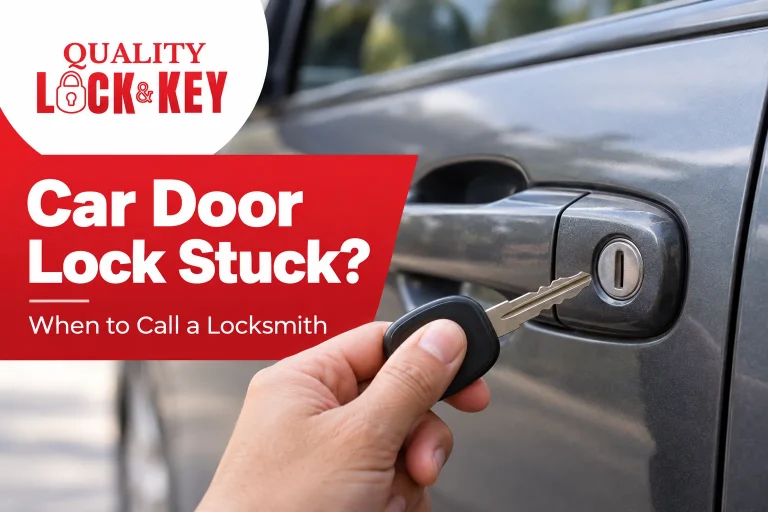
A car door lock stuck in place needs an automotive locksmith when normal key use fails, the cylinder feels loose, or you can see damage. If one power lock acts differently from the rest, it also needs inspection, though the fault may be electrical. Being able to enter through another door doesn't tell you which part has failed.
Car door lock stuck on just one door?
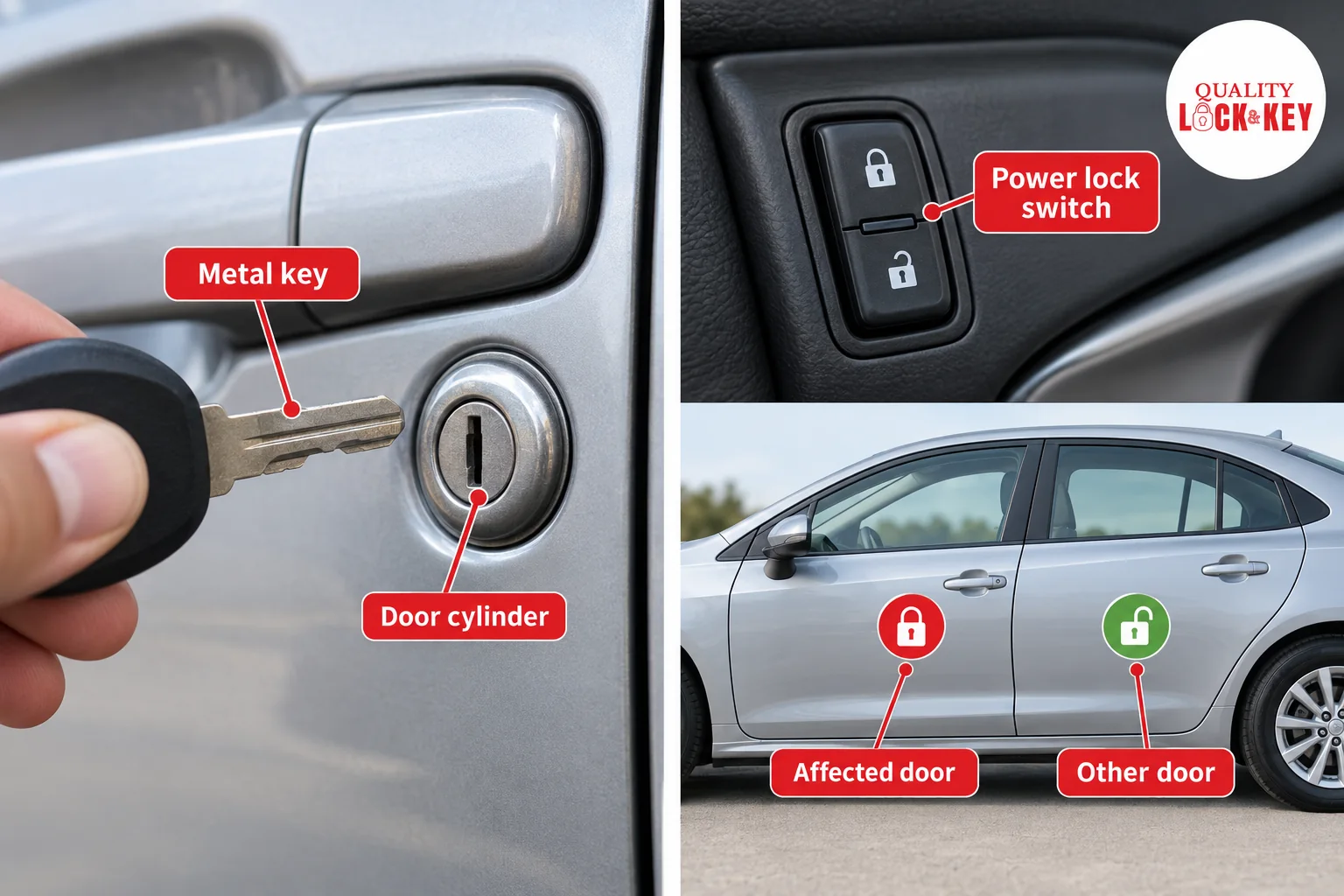
Start with what isn't working. The metal key and the power lock use different parts. Their behavior gives useful clues, but it doesn't prove which part needs replacement.
The metal key catches or the cylinder moves
The cylinder is the part where you insert the metal key. Wear can make the key hard to turn or leave the cylinder feeling loose. CarParts.com lists extra jiggling, a key that won't rotate, looseness, and visible break-in damage among warning signs.
A lock that works only after repeated jiggling still needs attention. Getting it to turn once doesn't show that the problem is gone. Visible damage also deserves inspection rather than another attempt with more pressure.
Only the power lock acts up
An actuator is the small motor that moves a power lock. Each door has its own, so a fault can affect just one door. According to CarParts.com's actuator symptom guide, slow or erratic movement and clicking or grinding during power-lock use are warning signs.
If the other doors respond to the same command, report that difference. It helps narrow the inspection, but it doesn't prove the motor itself has failed.
Neither control gives a clear answer
If both the key and power controls fail on the same door, don't choose a replacement part from that symptom alone. The cylinder, motor, connecting parts, latch, wiring, or door alignment may need inspection.
Make a few gentle checks before booking
These checks help you describe the problem. They aren't a way to force a damaged lock back into service.
- Keep access available. Park safely, keep the keys with you, and don't close your only working entry with the keys inside.
- Look before testing. Check the key for an obvious bend and the lock opening for visible damage. Don't insert a visibly damaged key or put tools into the opening.
- Try the spare key once. If there's no visible damage, use normal, light pressure. Stop if it catches or resists. Don't use pliers to turn the key.
- Compare the controls. Note what happens with the remote and the interior lock switch. Listen during a normal attempt rather than cycling the locks over and over.
- Gather the booking details. Have the year, make, model, affected door, and a short description ready. Mention any visible damage and whether the problem started suddenly or grew worse.
If the spare behaves differently, include that detail. It gives the provider another clue without requiring you to take the door apart. Leave trim removal and work inside the door for the inspection.
Decide whether the car can be used safely
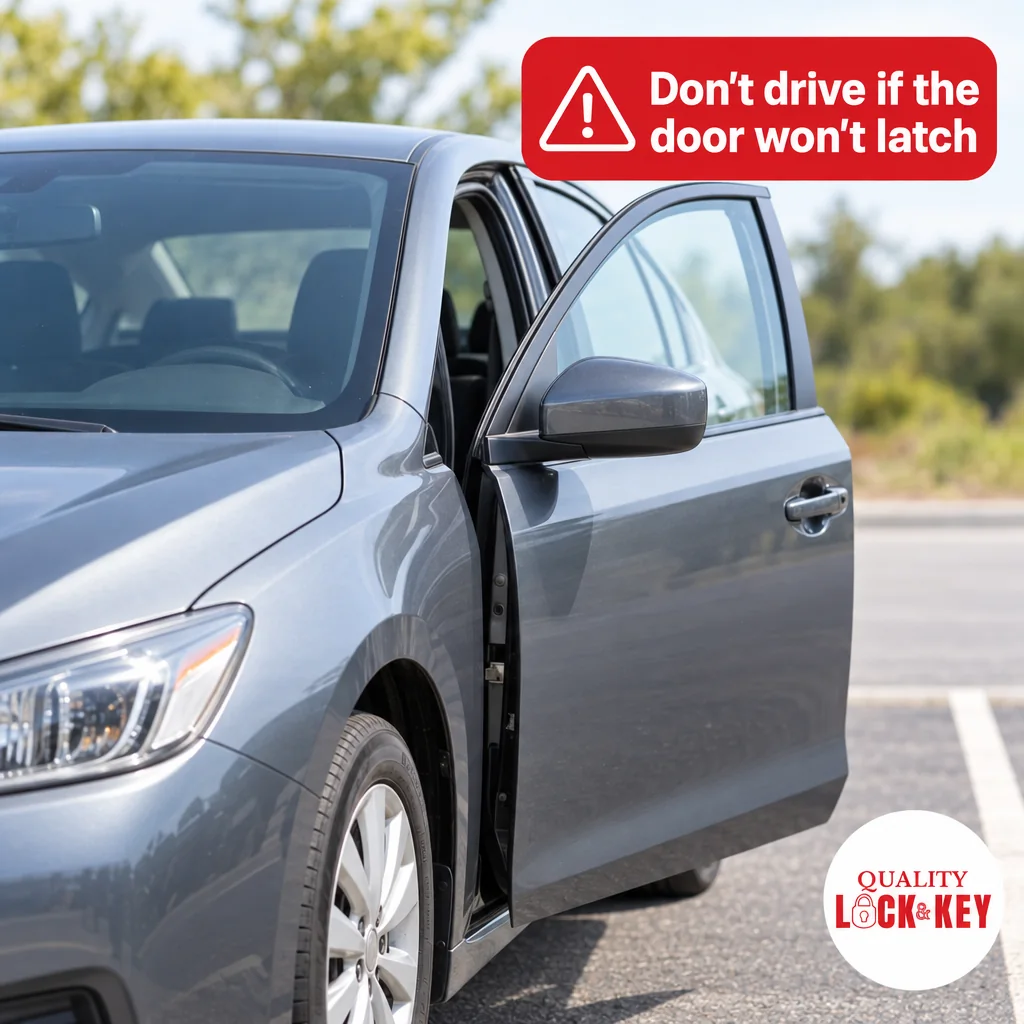
A door that won't lock presents a different problem from a door that won't stay closed. If the door won't latch and remain shut, don't drive the car. Arrange help where it's parked.
If the door closes but won't lock, don't assume the vehicle is secure because the remote flashed or another door locked. Avoid leaving valuables inside and plan prompt attention. Visible signs of forced entry also change the priority from a sticking lock to a possible security problem.
If a trapped person, fire, or smoke creates immediate danger, call 911 first.
Choose the repair based on the failed part
The useful question is whether the existing lock can be repaired, whether it needs a different key, or whether a damaged part must be replaced. Those are separate jobs.
Rekeying changes which key operates a usable cylinder. It doesn't fix broken metal or a failed power-lock motor. Replacement addresses a part that can't remain in service, but replacing the cylinder won't automatically solve a fault elsewhere in the door.
Before approving work, get a clear explanation of the failed part and the proposed fix. The estimate should identify the work and any parts involved. If the inspection points to wiring or another repair outside the provider's scope, the next step may be an automotive repair shop.
For a driver in Cypress or northwest Houston who can still enter through another door, describe the need as a lock repair rather than entry alone. Quality Lock & Key lists mobile car locksmith service in Cypress and says it can rekey or replace vehicle door locks on many jobs. The available fix depends on the vehicle and the lock's condition.
Don't buy a cylinder just because it looks like the old one. The correct part and repair path need to be identified first. Parts availability and fit for your vehicle aren't established by a general symptom description.
More questions about damaged car door locks
For help with a stuck or damaged vehicle door lock in Cypress, call Quality Lock & Key at (281) 871-1658. Describe the affected door and the checks you've made so the team can discuss mobile automotive locksmith service for your vehicle.