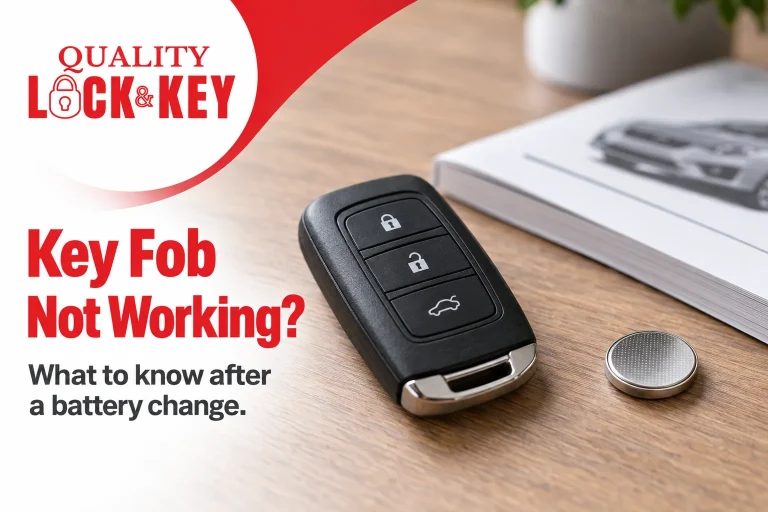
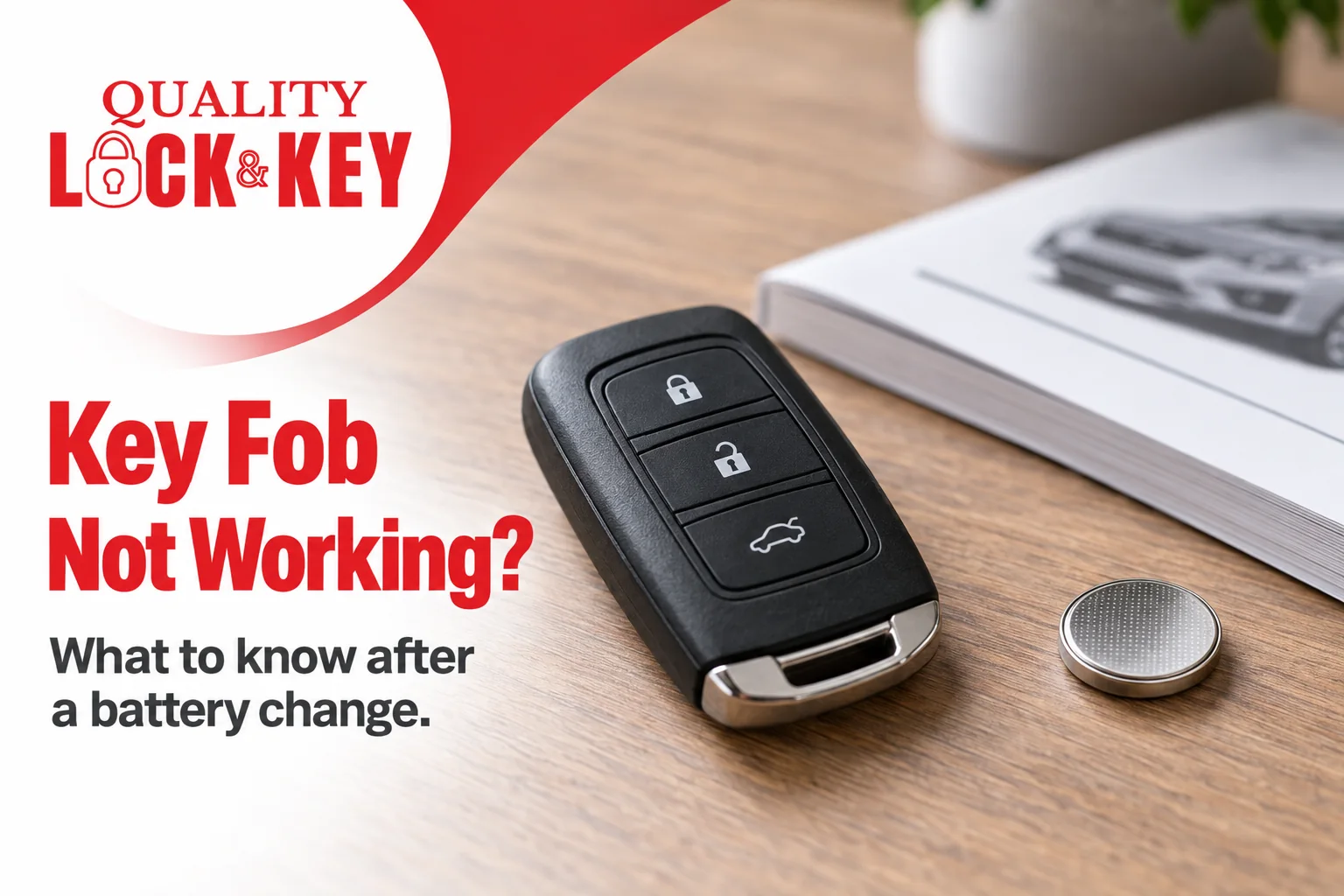
Key fob not working after a battery change? Check the battery type, its direction, and how it sits against the contacts first. Then compare a spare fob if you have one. Programming may be needed, but a damaged fob or a problem with the car can cause the same trouble.
Pin down which function stopped working
A fob that won't unlock the doors has a different symptom from a car that unlocks but won't start. If the dashboard says it can't detect the key, pay attention to the exact message. A car that won't start doesn't automatically have a key problem.
Notice whether every button fails or just one. Also note whether the trouble began right after you opened the case or was already happening before the battery change. These details help separate a problem introduced during the swap from the original fault. They don't prove which part has failed, but they give testing a useful starting point.
Check the battery installation before buying parts
Use the owner's manual for your vehicle and fob version. Kia's battery replacement instructions warn that the wrong battery or reversed polarity can cause trouble. Those instructions are model-specific, so don't use them to choose a battery for a different car.
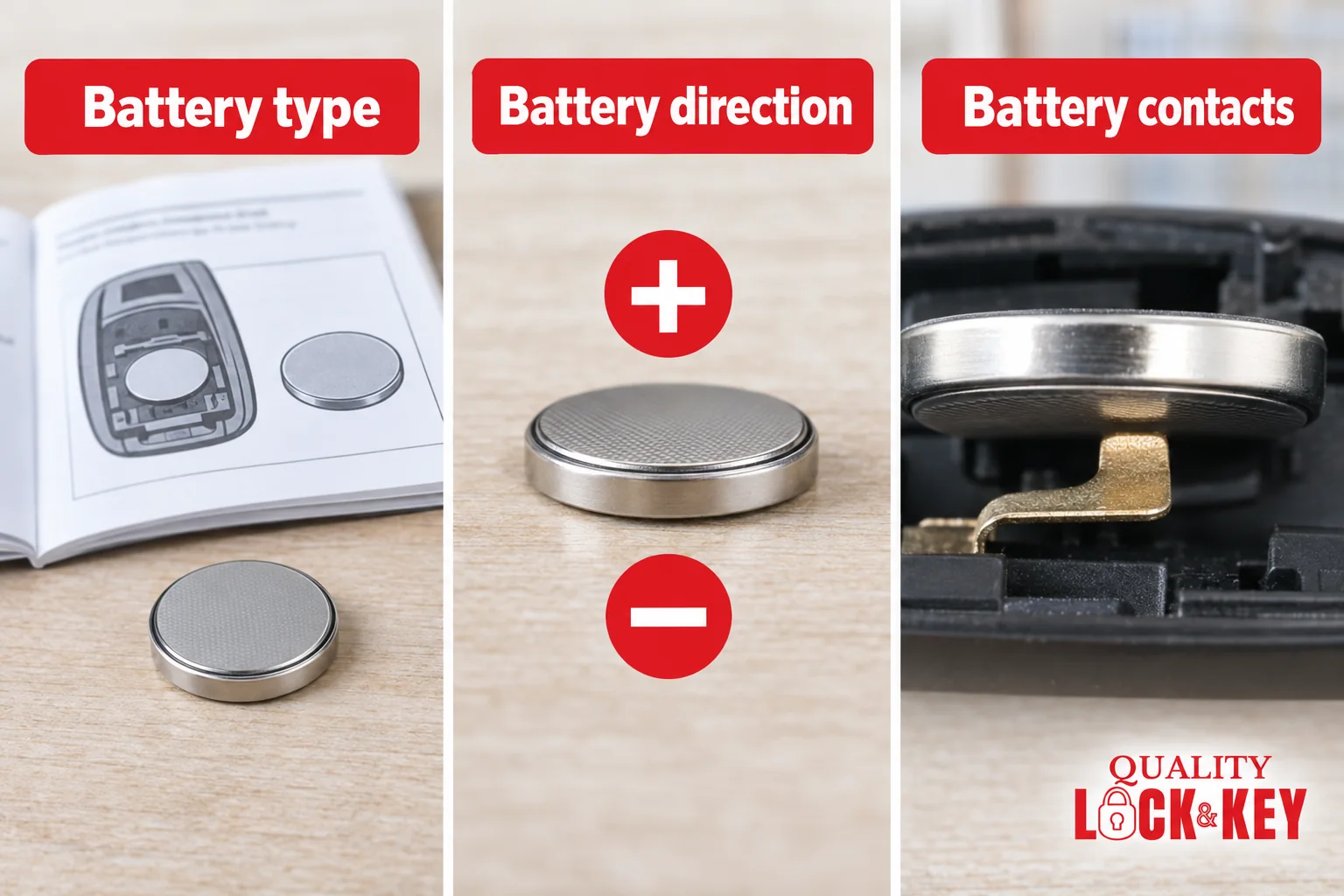
- Battery type. Match the battery code to the manual's specification. Don't choose a cell only because it fits inside the case. If the old battery was incorrect, copying its code won't settle the question.
- Battery direction. Compare the plus and minus markings with the manual or the diagram inside the fob. Don't assume the plus side always faces up.
- Battery contacts. Check that the cell sits in its intended position against the metal contacts. Look for a loose cell or a contact that appears damaged. Don't bend contacts to force a tighter fit.
- Case fit. Reassemble the case as the manual directs, then test the buttons. If the case won't close normally, don't squeeze it shut or force the clips.
Use a spare to narrow down the fault
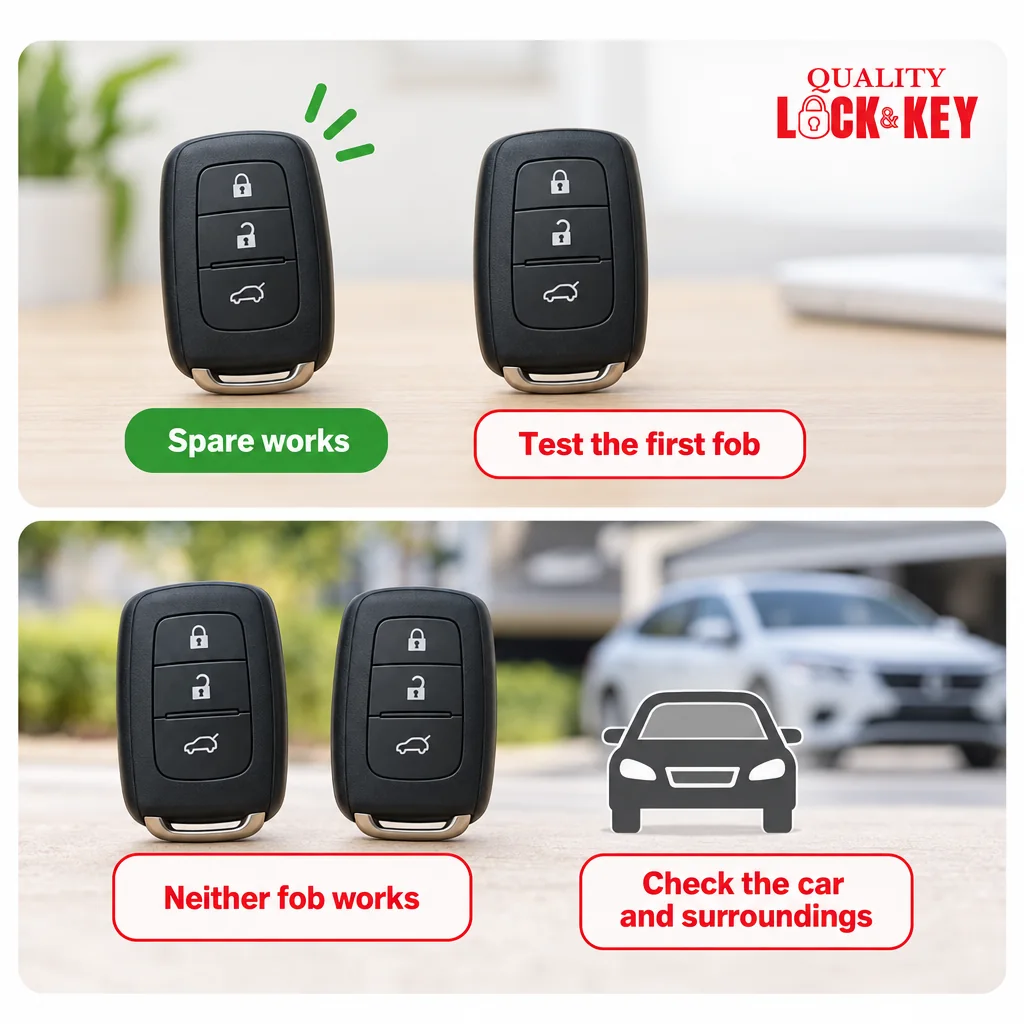
Test the spare from the same spot and under the same conditions as the first fob. Compare the function that's failing, rather than testing door unlocking on one fob and starting on the other.
If the spare works, the first fob needs closer testing. That result alone doesn't tell you whether it lost its pairing with the car or has damaged parts.
If neither fob works, don't jump to buying two replacements. The car's signal receiver or another problem with the car may need attention. The surroundings may also affect recognition. Without a spare, you'll have less evidence to separate these possibilities, so leave the cause open.
See whether nearby electronics change the result
Separate the fob from your phone and other electronics, then test it from a safe position beside the parked car. If recognition changes when you move the fob, report that pattern rather than treating it as proof that programming is needed.
A security-fob troubleshooting bulletin hosted by NHTSA notes that nearby electronics and location can affect recognition. It's written for motorcycles, so it supports this basic signal check, not a reset procedure for your car.
Don't walk into traffic or stand behind a moving vehicle to test the remote. A parking-lot check should stay within a safe space.
When key fob programming may be needed
AAA's advice on key fob problems lists reprogramming as a possible need after battery replacement. It also separates lost pairing from damage to the fob or the part in the car that receives its signal.
Programming lets the car recognize a compatible key or fob. If the battery checks don't solve the problem, testing can help decide whether that pairing needs attention or whether something is damaged. Programming won't repair a damaged electronic part.
Quality Lock & Key offers on-site transponder and key fob programming in Cypress. Whether programming is suitable depends on the vehicle and the exact fob. Treat it as a possible repair after checking the cause, not an automatic charge that follows every battery swap.
Get ready for a mobile visit
For service at a Cypress driveway, workplace, or parking lot, give the exact location of the parked car and any access instructions. Have the vehicle available and gather these items in one place.
-
The vehicle's year, make, and model.
-
All available keys and fobs, including any spare you tested.
-
Registration and ID as proof of ownership.
-
The battery type you installed and the exact dashboard message, if there is one.
-
Your test results and whether the fob is original, aftermarket, or previously used, if you know.
You don't need to name the failed part before requesting help. A clear account of what works and what doesn't is more useful than a guessed diagnosis.
Questions before you reset or replace the fob
For mobile key fob and transponder programming help in Cypress, call Quality Lock & Key at (281) 871-1658. Describe the failed function and your test results so the team can review the next step for your vehicle.