A garage entry door lock should be planned like an exterior door lock. Check that the door closes and latches on its own, then look at the deadbolt, strike plate, and frame. A deadbolt with a 1-inch throw, a reinforced strike, and 3-inch screws into the framing is a practical starting point. Rekey or replace hardware if keys are unaccounted for, the lock is worn, or the door no longer fits well.
Why the garage-to-house door needs its own security check
An attached garage can feel like part of the home, yet its overhead door may be left open during yard work, unloading, or a quick trip inside. The walk-through door then becomes the next barrier between the garage and your living space.
Give this door the same attention you would give a front or back entry. The lock matters, but it works with the door, jamb, hinges, and latch. A strong lock cannot make up for a loose strike plate or a door that does not close fully.
A good time to inspect it is after moving in, before a trip, after losing a key, or when you have started pulling or lifting the door to get it to latch. Do not make a sticky latch part of the daily routine.
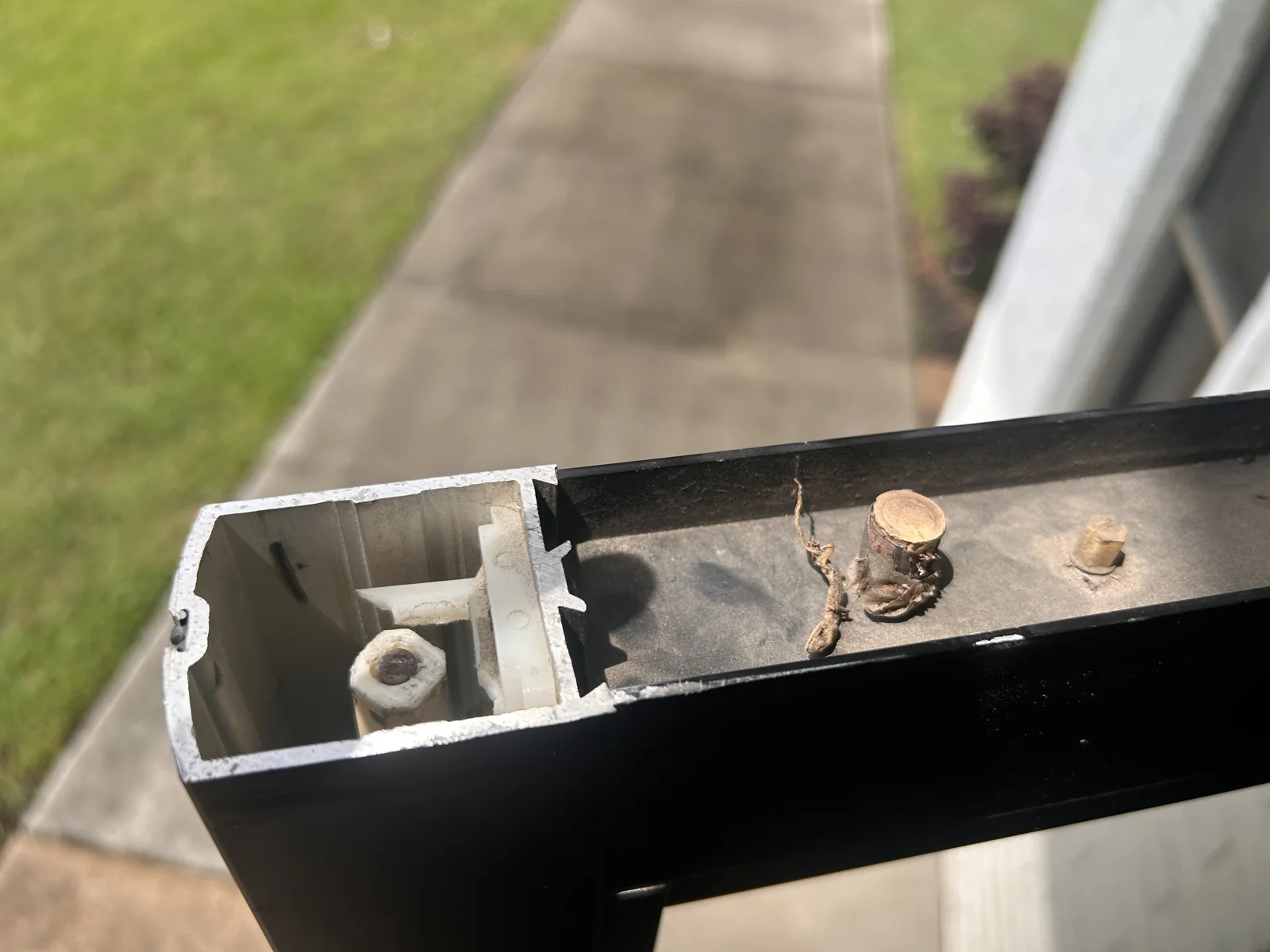
Start with the door and its closing action
Close the door from the house side and from the garage side. It should swing without rubbing, settle into the frame, and let the latch catch without a push, pull, or shoulder bump. Then lock and unlock the deadbolt several times with the door open and closed.
Look for these warning signs
- The latch does not enter the strike plate unless you lift, shove, or pull the door.
- The deadbolt scrapes the strike opening or will not extend fully.
- The strike plate moves, sits crooked, or has missing screws.
- The door has a visible gap at the latch side when closed.
- The knob or lever feels loose, sticks, or spins without opening the latch.
- The door closes but rebounds instead of staying latched.
These clues can point to a shifted door, worn hardware, loose mounting screws, or an opening in the frame that no longer lines up. Fix the fit before choosing a new lock. Otherwise, even good new hardware may bind or fail to latch.
Choose a garage entry door lock based on the full opening
For most homeowners, a key-operated deadbolt paired with a working latch is the core choice. The latch keeps the door shut when it closes. The deadbolt adds a separate locking bolt. Locking only the knob or lever usually gives less resistance than a properly installed deadbolt.
Consumer Reports recommends a deadbolt with at least a 1-inch throw, a reinforced box strike, and 3-inch screws. Its entry-door testing also identifies the jamb near the strike plate as a common weak point. The screws matter because they can reach beyond the thin door trim and into the framing behind it.
Match the hardware to your daily use
| Homeowner need | Practical lock plan | What to verify first |
|---|---|---|
| Simple, familiar access | Key-operated deadbolt and a standard latch or lever | The key turns smoothly and the bolt enters the strike without force |
| Keys may be in other hands | Rekey the existing lock if it is in good shape, or replace worn hardware | Which doors use the same key and whether every issued key is accounted for |
| You want key-free garage access | Keypad or smart deadbolt from a suitable product line | Door fit, correct backset, battery access, and the lock’s listed installation needs |
| You are replacing the whole lockset | Deadbolt and latch hardware selected as a set for the door | Door thickness, handing, existing hole locations, and strike condition |
A keypad or smart lock can make it easier to enter from the garage without carrying a house key. It does not remove the need for a solid strike, a sound frame, or a door that latches. Read the maker’s requirements before buying, especially if you want it to work with an existing door or other home devices.
When comparing residential hardware, look for a label from BHMA Certified Secure Home. Its labels rate security, durability, and finish as Good, Better, or Best. Certified locksets and deadbolts are tested against industry performance standards. A rating is useful for comparing products, though it cannot promise that a door will stop every break-in attempt.
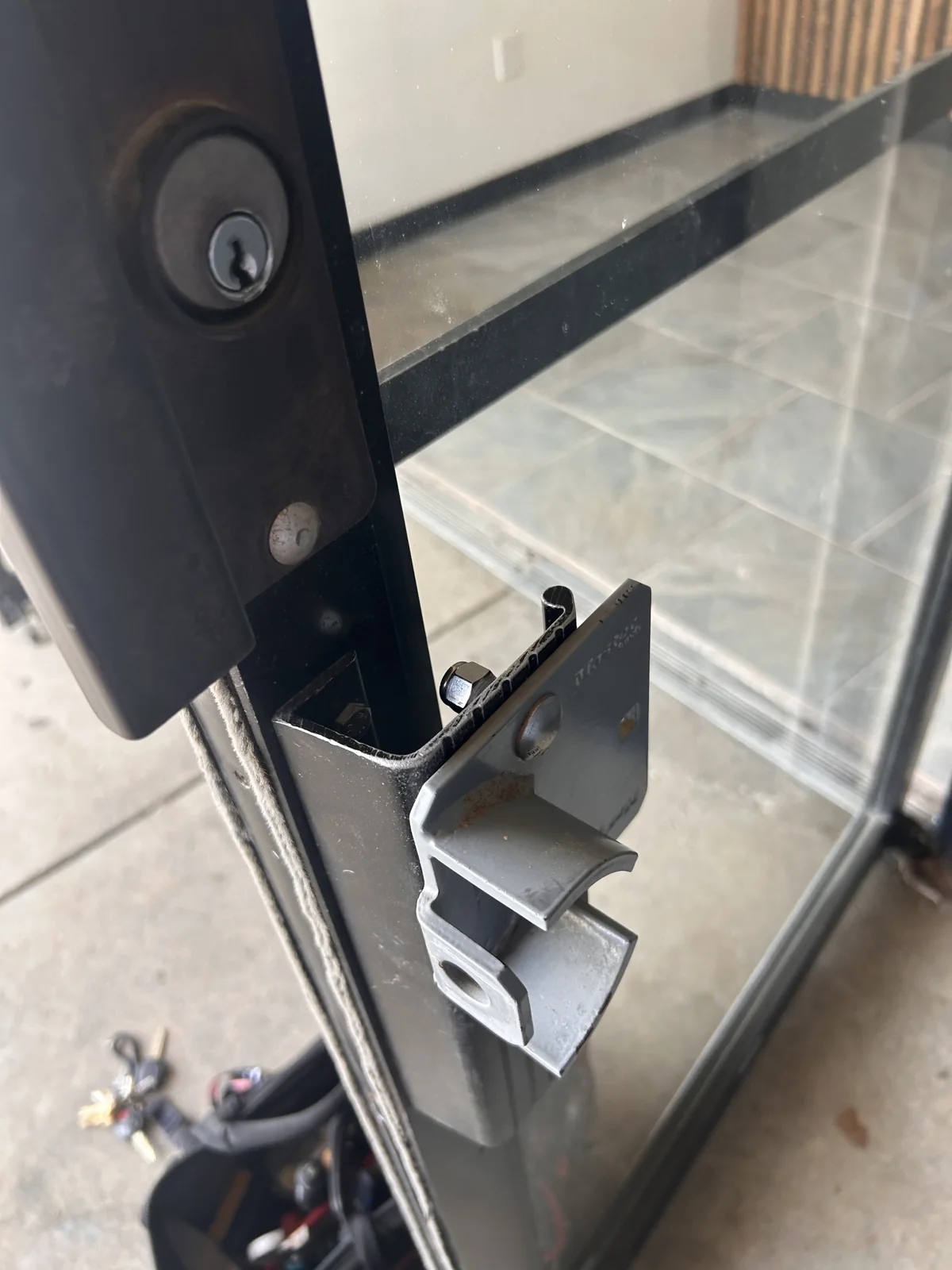
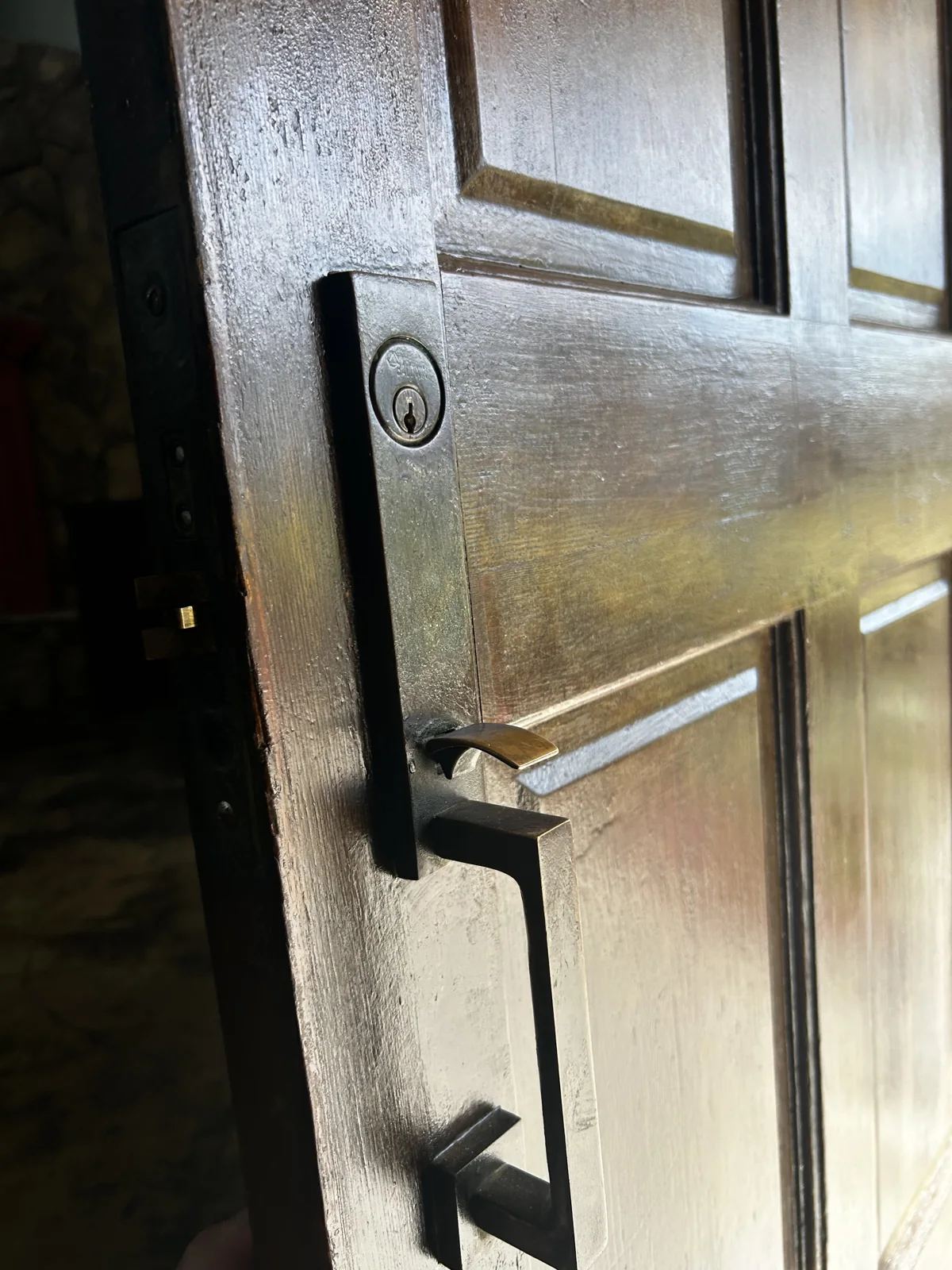
Reinforce the strike side before calling the job done
The strike plate is the metal piece on the frame that receives the latch and deadbolt. A reinforced box strike gives the bolt a stronger receiver than a thin flat plate alone. It must line up with the bolt and be anchored correctly.
Open the door and inspect the jamb around the strike. Watch for cracked wood, split trim, stripped screw holes, or screws that no longer hold. These are repair items, not details to hide under a new plate.
If you replace strike screws, make sure the screw length and placement suit the door frame. A professional can assess the framing and alignment when damage, misalignment, or uncertain construction is involved. Do not force a longer screw through an area where you do not know what is behind the jamb.
Keep the required closing function in the plan
The garage-to-house opening has fire and safety considerations along with security needs. The 2024 International Residential Code section R302.5.1 from the International Code Council addresses openings between a garage and dwelling. It references solid wood, solid or honeycomb steel, or 20-minute fire-rated doors. It also says these doors should be self-latching and have a self-closing or automatic-closing device.
Local adoption and amendments vary, so this is not a final determination for a Cypress address. If you are replacing the door, changing its closer, or have a permit or HOA question, check with the authority that applies to your property before work begins.
Do not defeat a closer or prop the door open because the latch sticks. That can leave the home open from the garage and may interfere with the door’s intended closing function. Have the fit or hardware checked instead.
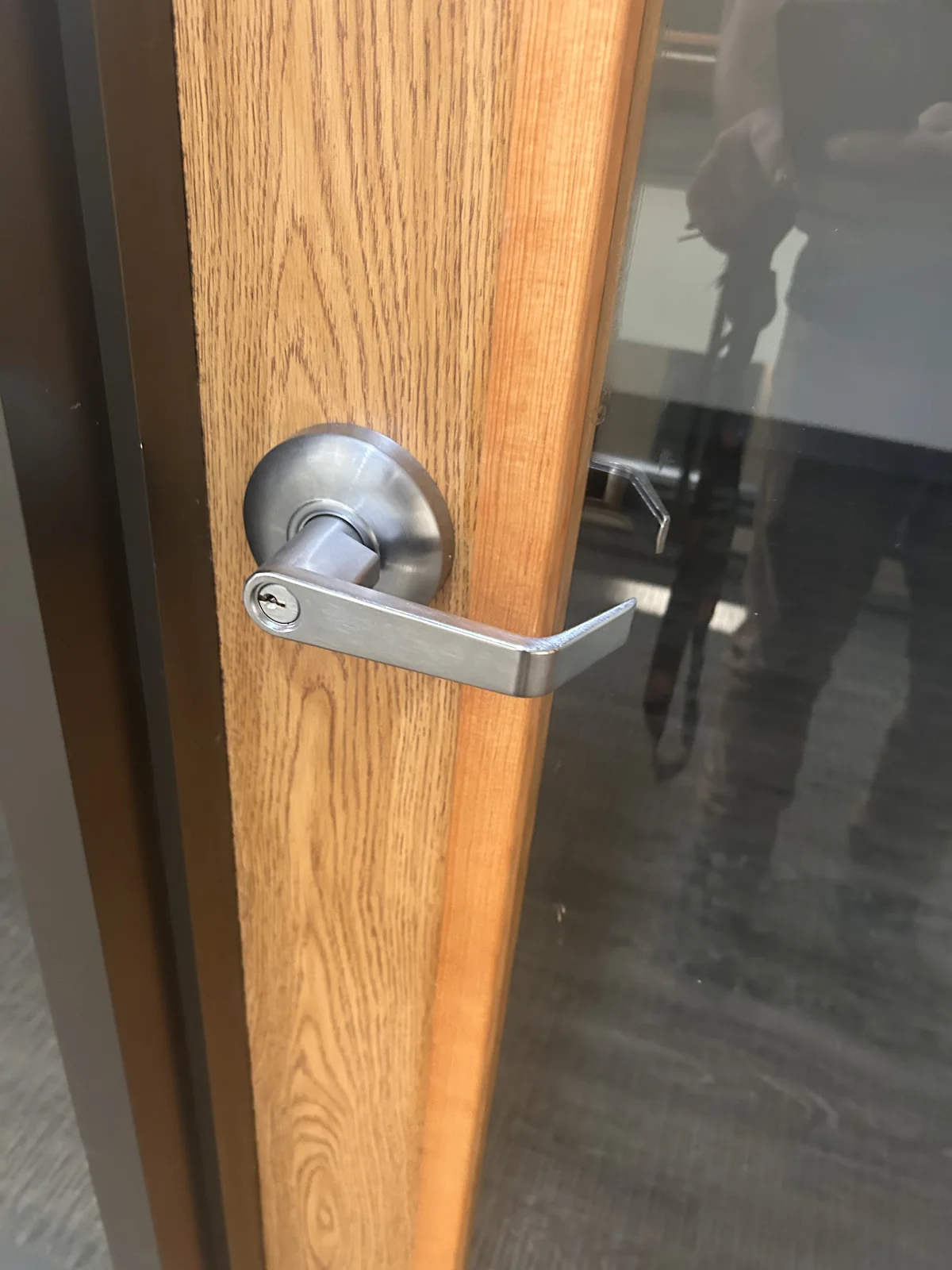
Decide whether to rekey, repair, or replace
Use the condition of the door and your key control to choose the next move.
- Rekey when the lock works well but you do not know who has copies of the current key. Rekeying changes the key that operates the existing lock cylinder.
- Repair when the latch, deadbolt, strike, or door alignment is causing trouble and the current hardware is otherwise worth keeping.
- Replace when the lock is damaged, badly worn, incompatible with the door’s condition, or no longer meets the access plan you want.
Moving into a home is a strong reason to review every exterior-facing access point. Quality Lock & Key lists rekeying garage entry and side doors for new homeowners, along with garage lock repairs, new lock installation, keypad and remote programming, and smart lock upgrades. If you need help with the garage-side opening, use its Locksmith for garage service page to choose the right service path.
Use this five-minute garage door check
- Close the overhead garage door before checking the walk-through door.
- Make sure the house door latches without being pushed or pulled.
- Lock the deadbolt and confirm it extends fully into the strike.
- Check that the strike plate and its screws are tight.
- Look for frame damage or a large gap around the latch side.
- Test the closer or automatic closing action if the door has one.
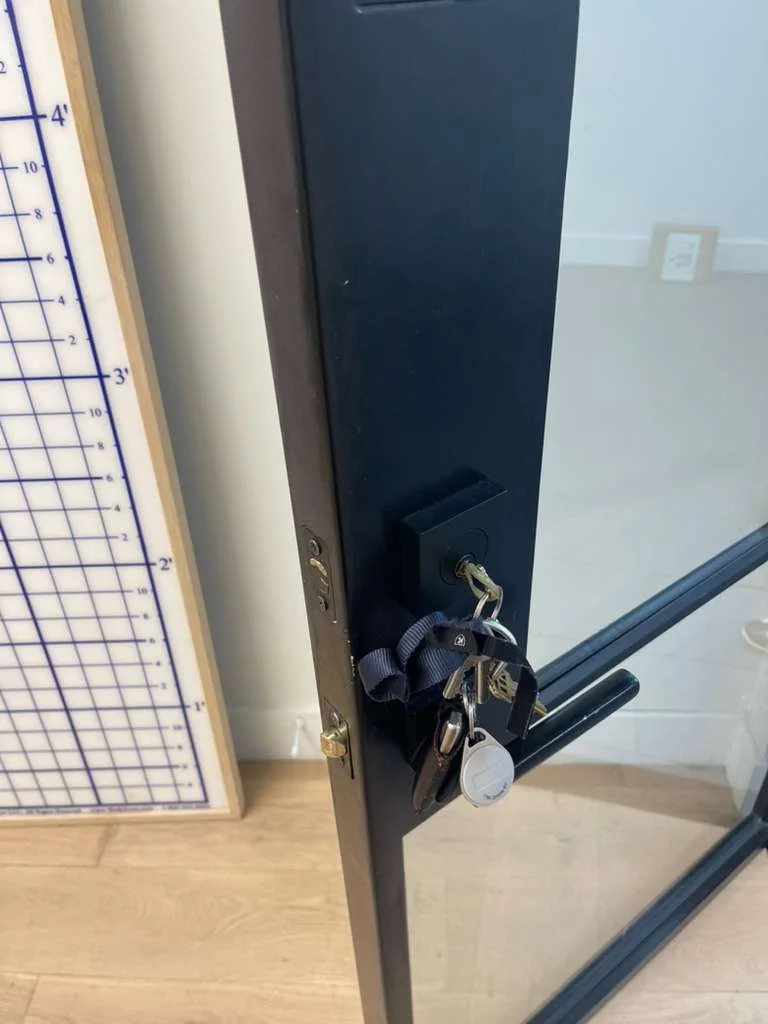
- List any missing keys, old tenant keys, contractor keys, or keys given to former owners.
If the door is hard to use, avoid slamming it or forcing the key. That can turn a small alignment problem into damage to the lock or frame.
Questions homeowners ask about garage entry door locks
Can I use the same key for the garage entry door and front door?
Often, a locksmith can check whether compatible lock cylinders can be keyed alike. The answer depends on the lock brands, keyways, and hardware condition. Keeping one key may be convenient, while separate keys can limit access if you want someone to enter the garage but not the house.
Should the deadbolt be locked when I am home?
That depends on how your household uses the garage door and the entry door. Keep the door ready for safe exit in an emergency. If people may need to leave through it quickly, choose and use hardware with that daily need in mind. Never make a person wait for a key to escape a fire or other immediate danger.
What if the deadbolt will not lock after weather changes?
Changes in moisture and temperature can affect door fit. Check whether the bolt is rubbing the strike opening or the door is dragging at the frame. Do not file, drill, or move parts until you know why the alignment changed. A door that shifts repeatedly may need more than a lock adjustment.
Does a smart garage entry lock work during a power outage?
That depends on the lock model and its power setup. Many electronic deadbolts use batteries for the lock itself, yet connected features may need a working network or hub. Check the product instructions for battery replacement, backup entry, and what functions remain available during an outage.
For garage entry door lock help in Cypress, call Quality Lock & Key at (281) 871-1658. Ask for help with rekeying, lock repair, a new deadbolt, or a keypad or smart lock upgrade, and describe how the door is closing so the technician can plan the next step.